
Shoulder instability happens when the top of your upper arm bone is forced out of its socket because of injury or overuse and repeated stress on the joint (or a combination of the two).
A more severe form of instability is a dislocation. This is where the humeral head moves out of its relationship with the glenoid labrum (the shoulder socket). The shoulder can dislocate forward or back.
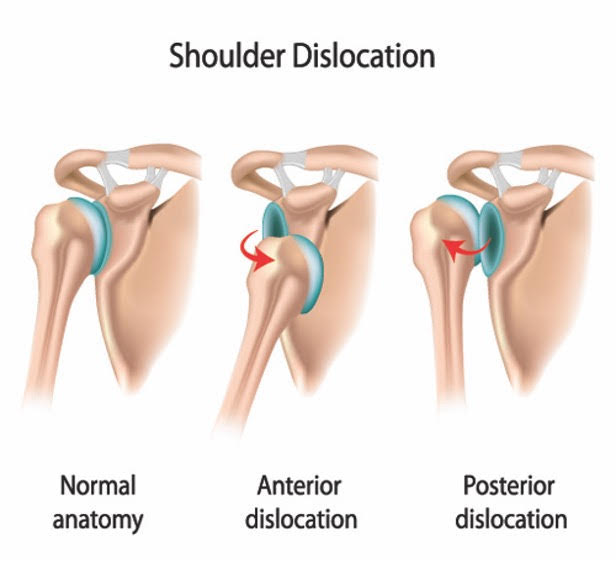
A dislocated shoulder might have symptoms that vary, but often include severe pain, swelling and difficulty moving the joint. Sports injuries often involve shoulder dislocation because of their high impact nature. A fall with the arm stretched upwards and out is likely to cause a shoulder dislocation.

When the shoulder joint dislocates, the shoulder muscles go into spasm and this can make it difficult to put the arm back into its correct place. If you think you have dislocated your shoulder, seek medical attention urgently.
They would usually order an X-ray to confirm that it has been dislocated. Afterwards, you may be given medication to control the pain. Your arm will be manipulated and the shoulder placed back into joint. You may even hear a ‘clunk’ as it goes back into place.
Your arm should be placed into a sling to rest.
You need to know that if this happens once, your shoulder joint can become loose, and you’re more vulnerable to repeat shoulder injuries. This is referred to as chronic shoulder instability.
What’s more, the cartilage rim around the edge of your glenoid, the labrum, may be torn as well, and this is referred to as a Bankart lesion. While the initial dislocation may not cause an extreme amount of pain or trauma, it can lead to continued disclocations, your shoulder joint giving out, prolonged pain and instability, all of which may require surgery.
Note that some people with shoulder instability have never dislocated their shoulders or experienced a similar severe injury. Many lifestyle factors and even how your body is naturally built can result in shoulder instability.
For example, perhaps you naturally have shoulder ligaments that are more loose, (just because that’s your unique anatomy), or you regularly participate in sports that require a lot of overhead repetitive overhead motion or collision.
Regardless of the cause, having loose shoulder ligaments makes it difficult to maintain shoulder stability, especially if you are still engaging in repetitive activities that put a significant amount of stress on your shoulder.
These individuals may experience multidirectional instability, which means that the shoulder joint has become unstable without a history of injury or previous significant pain.
Treatment for instability is based on strengthening the muscles around the shoulder. The strengthening programme should start in a simple and fundamental manner and then progress in different shoulder positions and performing graded sports stresses, such as increasing the speed of shoulder movement.
Our aim at Melbourne Shoulder Therapy is to provide you with confidence that you can return to action effectively prepared.