
Triceps tendon repair is a surgical procedure performed to restore strength and movement to the elbow after a rupture of the distal triceps tendon. The tendon connects the triceps muscle at the back of the upper arm to the olecranon (the bony tip of the elbow). This tendon is essential for straightening the arm and performing pushing movements. Tears usually occur from a sudden, forceful contraction of the muscle, such as during heavy lifting or a fall, and often result in weakness, pain, and difficulty extending the elbow. Surgical repair is generally recommended for complete ruptures to regain full function and prevent long-term loss of strength.
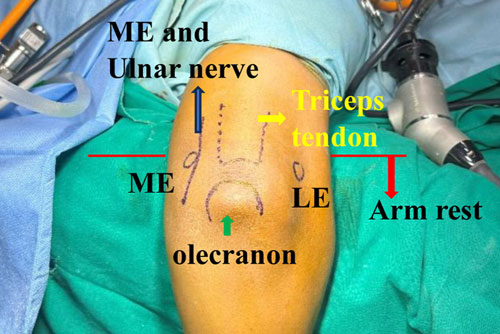
During surgery, the torn tendon is reattached to the bone. This provides a strong, anatomical repair that allows the tendon to heal securely to the bone. After surgery, the arm may be immobilised in a back-slab for the first two weeks to protect the repair, and a waterproof dressing is applied to keep the wound clean and dry.
Rehabilitation after triceps repair is crucial for a successful outcome and proceeds in structured phases. In the first two weeks, movement of the fingers, wrist, and shoulder is encouraged while the elbow remains supported to prevent stiffness and swelling. From two to six weeks, the splint is removed, and gentle elbow movements begin, focusing on active flexion and passive extension, while avoiding any active pushing or loading through the triceps. Between six and twelve weeks, range of motion exercises increase, and light functional use of the arm resumes, although weightbearing and resisted triceps activity are still restricted. After twelve weeks, progressive strengthening and conditioning exercises may be introduced to rebuild muscle endurance and restore normal function.
Most patients regain excellent strength and range of motion within six to twelve months, with full recovery continuing up to two years. Complications are uncommon but may include ulnar nerve irritation, joint stiffness, or rare cases of tendon re-rupture. By following post-operative guidelines and working closely with a physiotherapist, patients can expect to return to daily activities, work, and sports with strong, stable elbow function and minimal long-term limitations.