
At Melbourne Shoulder Therapy we have vast experience and expertise in rehabilitating shoulders and upper arm conditions. However, sometimes the nature of shoulder and upper arm injuries means the best approach to recovery means surgical repair is required.
Around the shoulder region, there are many common operations that may need to be performed. These include rotator cuff repairs after full thickness tears or ruptures, shoulder replacements after severe osteoarthritis or fractures into the joint, shoulder reconstruction after dislocation and humeral fractures. These are common fractures from falling, which are close to the shoulder or elbow.
A full thickness rotator cuff tear is deep, but it may not go across the width of the tendon, and it may be possible to rehabilitate the injury and avoid surgery. When rehabilitation is unsuccessful, an operation will be required, and we will reach out to your surgeon to inform them of the situation. At Melbourne Shoulder Therapy we work very closely with Orthopeadic Shoulder Surgeons and form an effective team, working together.
In collaboration with surgeons, we have established protocols for rehabilitation following surgery. However, there might be variations to standard protocols, depending on the location of a bony fracture, or the depth and position of a soft tissue tear, or the personal situation of patients such as their age, associated other health details, or their living arrangements.
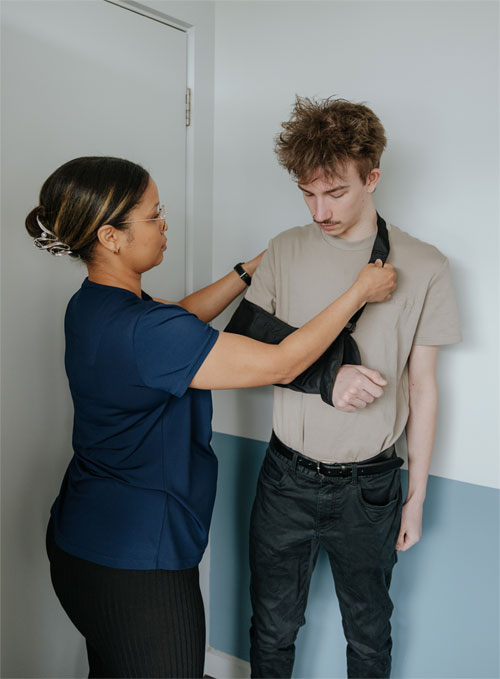
As is the case for all physical issues, a critical part of our post-operative care is the discussion between patient and therapist. It’s important that you have an understanding of what an operation involves and what is likely to take place afterwards. For rotator cuff repairs and fractures of the humerus, it is likely that you will wear a sling for 6 weeks and active movement of the arm might have to wait until after this time.
Having treated many patients following their shoulder surgery, we have broad experience identifying whether the patient is progressing as expected. It is always a very nervous time for people following shoulder surgery. You need to have confidence that your treating physiotherapist is aware of the expected timelines and stages for recovery.