
Shoulder osteoarthritis causes a gradual, progressive, mechanical, and biochemical breakdown of the articular cartilage and other joint tissues, including the bone and joint capsule. As the articular surface wears, friction within the joint increases, causing progressive loss of the normal load-bearing surfaces with pain and disability.
Shoulder osteoarthritis is more common in women and in people over the age of 60.
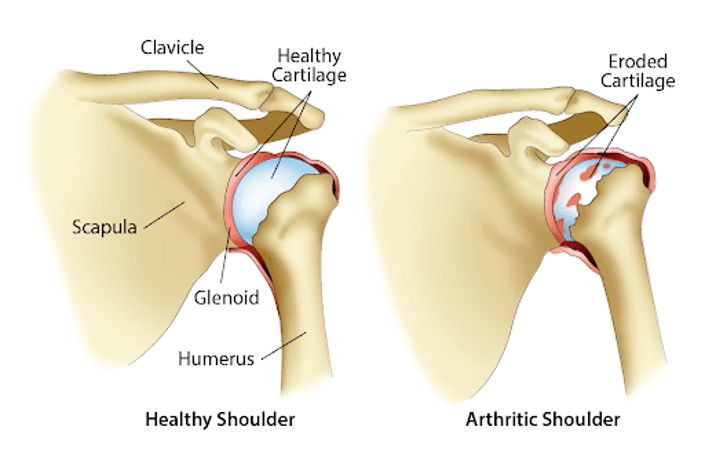
Typical presenting symptoms for shoulder osteoarthritis are:
- Progressive, activity-related pain that is deep in the joint and often localised at the back of the shoulder
- As the disease progresses, night pain becomes more common
- For many patients, the pain is present at rest and interferes with sleep
- In advanced cases, stiffness creates significant functional limitations
- Crepitus (a crackling sound/feeling) during shoulder movement
- Swelling of the joint
In younger patients, prior trauma, dislocation, or previous surgery for shoulder instability are factors associated with the development of osteoarthritis.
An x-ray is the best way to understand the degree of degeneration in the bone that has occurred.
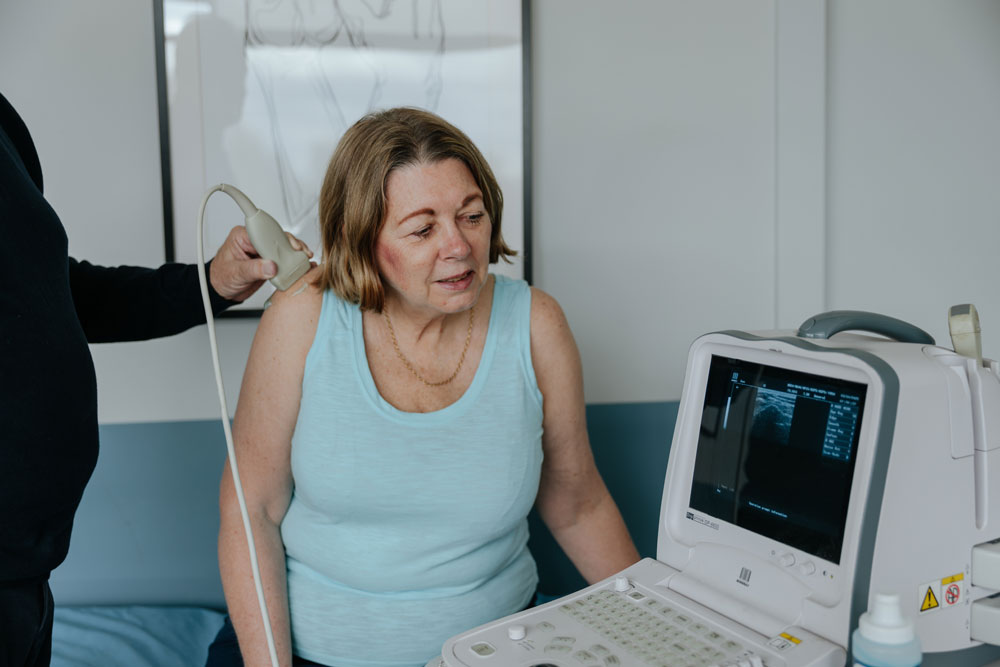
Physiotherapy treatment for shoulder arthritis is based on a detailed assessment of the patient. Once the physiotherapist has an accurate understanding of the shoulder’s movement and strength, they can develop a plan of treatment.
The treatment plan emphasises strethening where the patient is weak and mobilisisng where there is stiffness. Often the manner of movement needs to be improved.
Although manual therapy can be provided for shoulder osteoarthritis, a home exercise programme is the key element in treatment.
Strengthening the rotator cuff and the scapula (shoulder blade), to provide support for the shoulder, is critical. Mobilising exercises for shoulder elevation and rotation are important.
As with other issues, educating people about osteoarthritis is very important. Some people panic for the future once they hear the word osteoarthritis. Advice concerning how to deal with the condition and what the future holds is appreciated by patients.