
Ulnar Nerve Decompression and Transposition
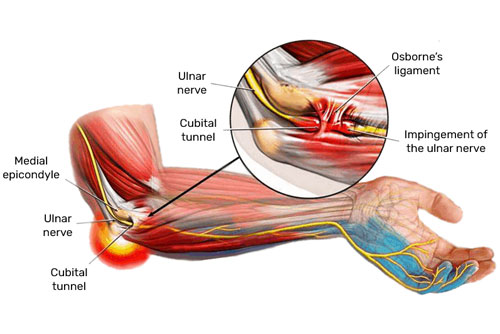
Ulnar nerve decompression and transposition are surgical procedures designed to relieve pressure on the ulnar nerve as it passes through the elbow. The ulnar nerve travels along the inner side of the arm and wraps around the back of the elbow. Compression of this nerve, often called cubital tunnel syndrome, can result from arthritis, previous injury, bone spurs, or repetitive elbow flexion. In some cases, the cause is unknown. When compressed, the nerve can cause numbness, tingling, and pain in the ring and little fingers, often worsening at night or when the elbow remains bent for long periods. Prolonged compression can result in muscle wasting in the hand.
If non-surgical treatments such as splinting, physiotherapy, or activity modification fail to relieve symptoms, surgery may be recommended.
The aim of the procedure is to relieve pressure on the nerve and prevent further damage. During a decompression, the surgeon releases tight tissue or structures pressing on the nerve, leaving it in its original position. Another surgical option is when they transpose the nerve. This is when the nerve is repositioned towards the front of the elbow to prevent it from being stretched or irritated during movement.
After surgery, patients are encouraged to start gentle movement of the elbow and fingers soon after the operation to prevent stiffness and promote recovery. End range flexion may be avoided initially if the nerve is transposed. Dressings should be kept clean and dry for the first few weeks. While light activities can often be resumed within a couple of weeks, full recovery can take several months. Symptoms such as numbness or weakness does take time to improve, as the nerve heals slowly.