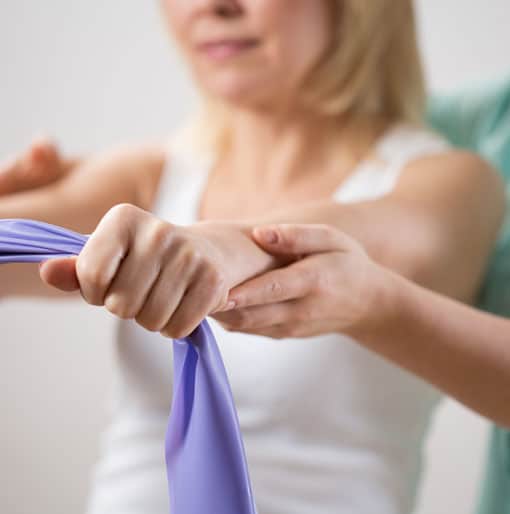

Measuring strength of the muscles surrounding the shoulder is critical when assessing shoulder pain.
Often, weakness around the shoulder provides vital information about which tendons of the rotator cuff may be damaged.
It also provides important information about which muscles need to be strengthened for a full recovery.
At Melbourne Shoulder Therapy, we take the guesswork out of assessing muscle strength by using a manual dynamometer. When we measure rotator cuff muscle strength, this device accurately measures the strength of certain movements and is a critical piece of equipment to get your shoulder moving pain-free again, in the shortest possible time.

By using a dynamometer, we can target specific muscles and movements that are in need of strengthening, which will promote a full recovery. It provides an objective measure of a patient’s strength.
Using the dynamometer allows us to accurately track your progress during your rehabilitation.
The way your shoulder blade (scapula) moves can be responsible for your shoulder pain.
When the shoulder blade is not moving as it should, it’s called scapular dyskinesis.
When the arm is moved upwards, the shoulder blade moves in a way to assist that upward movement. When the shoulder blade is not moving correctly, the rotator cuff tendons can be irritated or compressed, leading to shoulder pain. This is because the roof of the shoulder is an extension of the shoulder blade, called the acromion. If the shoulder blade is not moving correctly, and scapular dyskinesis is occurring, the distance between the acromion and the top of the humerus (the arm bone) may be reduced, which then compresses the rotator cuff and the subacromial bursa.
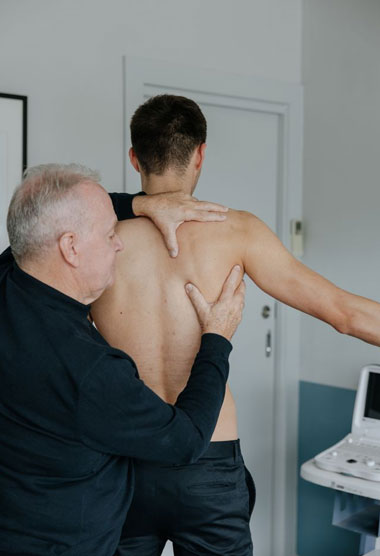
At Melbourne Shoulder Therapy, when we assess your shoulder movements we pay close attention to the way the shoulder blade is moving, to diagnose any scapula dyskinesis that may be in operation.
Part of your treatment routine for rotator cuff pain or bursitis may involve re-education of your shoulder blade movements. It may also involve strengthening and stretching certain muscles around the shoulder blade.
The shoulder blade can be seen as the base of the shoulder, as well as the roof of the shoulder, because it contains the shoulder socket (glenoid fossa), so you can see how important the shoulder blade is for normal shoulder functioning, and how critical it is to a successful rehabilitation of the shoulder.
Shoulder pain can arise from many causes, including rotator cuff tendinopathy, bursitis, impingement, frozen shoulder, osteoarthritis, or instability. Repetitive overhead movements, poor posture, trauma, or sports injuries often trigger these issues. Muscle imbalances, weak rotator cuff muscles, or shoulder joint wear and tear can all play a role. Physiotherapy helps by identifying the root cause, reducing inflammation, improving strength, and restoring pain-free movement. If you’re experiencing shoulder pain that doesn’t improve within a few weeks, it’s time to see a physio for assessment.

If shoulder pain persists for more than 2–3 weeks, limits your daily activities, disrupts sleep, or causes weakness or instability, it’s a good idea to see a physiotherapist. Physio can help early on by reducing pain, preventing worsening symptoms, and avoiding complications like frozen shoulder or chronic instability. Don’t wait until pain becomes unbearable — the earlier you get help, the better the outcome.
Recovery time depends on the condition and severity. Mild issues like bursitis may improve in 2–4 weeks, while rotator cuff tears or frozen shoulder can take several months. Your physio will give you a realistic timeline and set clear goals. The good news? With consistent treatment and home exercises, most people see noticeable improvements within the first few weeks.
Your first appointment includes a thorough assessment of your shoulder’s range of motion, strength, posture, and movement patterns. Your physio will ask about your symptoms, medical history, daily activities, and goals. They’ll explain the likely diagnosis, outline a treatment plan, and often start gentle hands-on treatment or exercises right away. Expect to leave with a clear understanding of your condition and practical steps to take at home.
In many cases, yes! Physiotherapy can strengthen muscles, improve joint function, and reduce pain, potentially avoiding or delaying surgery. Conditions like rotator cuff tendinopathy, impingement, or frozen shoulder often respond well to conservative care. However, some cases — like large rotator cuff tears or recurrent dislocations — may still need surgery. Your physio will work closely with you and your doctor to guide the best approach.

Anterior shoulder instability occurs when the ball of the shoulder repeatedly slips forward out of the socket, usually after trauma like a dislocation. Symptoms include pain, a sense of looseness, and fear of movement. Physiotherapy focuses on strengthening the rotator cuff and shoulder stabilisers, improving proprioception (joint awareness), and retraining movement patterns. Surgery may be needed if instability persists despite rehab, but many people improve significantly with a well-structured physiotherapy program.
After a dislocation, initial treatment focuses on pain management, immobilisation, and gentle range-of-motion exercises. As healing progresses, physiotherapy helps restore joint stability, strength, and function. A key goal is preventing repeat dislocations by strengthening the rotator cuff and scapular muscles. Gradual return to sport or high-risk activities is carefully guided to avoid reinjury.

Rotator cuff tendinopathy typically causes dull shoulder pain, especially with overhead activities, and may include some weakness. A rotator cuff tear, on the other hand, often presents with sudden pain, significant weakness, difficulty lifting the arm, or night pain. Physio assessment can help differentiate the two. Tendinopathy usually responds well to rehab, while larger tears may need surgical evaluation.

This condition involves inflammation or degeneration of the biceps tendon where it runs through the shoulder. Physio management includes rest from aggravating activities, manual therapy, soft tissue release, strengthening exercises for the rotator cuff and scapular muscles, and gradual return to activity. Your physio may also address contributing factors like posture and shoulder mechanics.

Shoulder impingement occurs when the rotator cuff tendons get compressed under the bony arch of the shoulder. It’s often caused by repetitive overhead activity, poor posture, or muscle imbalance. Physio treatment focuses on improving posture, strengthening the rotator cuff and scapular stabilisers, improving shoulder mobility, and correcting movement patterns to reduce impingement.